5 Tips for a Winning Speech Therapy Collaboration

Speech Therapy Techniques
Speech therapy collaboration

Image source: ICNetwork.co.uk

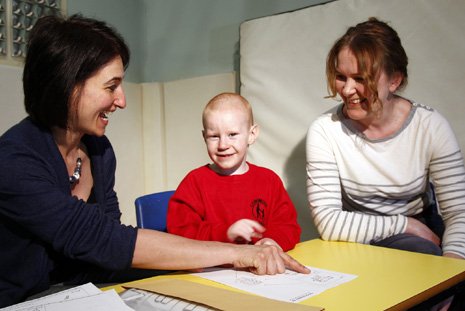
You know the saying it takes a village, but when it comes to special needs children, the village can make a striking difference in the effectiveness of speech therapy. Collaboration doesn’t always come easy, but once you have a handle on it, speech therapy techniques can be seamlessly integrated at home and at school so that your efforts build to a greater result. Not only should you see better results with collaborative therapy, but you will see a rapport develop between parents, teachers and the therapist that will foster communication and coordinated efforts toward the common goal of improving a child’s speech.


Continue reading

Special Event – Chicago Special Needs Resource Fair Next Month

News State Resources
NPN Developmental Differences Resource Fair

Image source: NPNParents.org

Calling all Chicago parents of special needs children! Whether you are looking for information on speech therapy techniques, schools, summer camps or any other resource, this annual fair is not to miss. Its’ coming up soon on February 10th. You can find more information including location and directions below. The event is organized by Neighborhood Parent Network (NPN) and is officially called “The Developmental Differences Resource Fair.”

And not only is NPN committed to helping parents of special needs children find resources, but their associate executive director Melanie Schlachter knows first hand how important it is to have tools at hand. Schlachter says, “As the parent of a child who was recently diagnosed with a developmental difference, I’ve just been absolutely amazed by all of the extraordinary resources that exist to help kids with different challenges.” Continue reading

Developmental Delay Alert: Is Mountain Living Dangerous To Your Baby’s Brain?

Language Development News
High altitude and developmental delays

Image source: TheSun.co.uk

For children who are born and live in high altitude regions, researchers have discovered a link between extreme altitudes and developmental delays. This may lead to an increased need for speech therapy techniques and practitioners in the affected areas. The study, by Dr. George Wehby, Professor of Health Management and Policy at University of Ohio, analyzed the developmental health of over 2,100 South American children looking for neurodevelopmental issues. The findings were staggering.

Continue reading

See Spot Run! Give Your Child a Reading Boost with Kids’ Games

News
Kids Games and Reading

Image source: Rossieronline.usc.edu

Speech-language pathologists (SLPs) have long known that early intervention with speech therapy techniques is critical for encouraging the best possible outcome for children with speech disorders. This is particularly true for youngsters with autism; they typically progress more with speech and language when they receive early and intense therapies. And parents everywhere have also long known that encouraging kids – even those without speech delays or disorders – to read early and often is ideal for language development. But teaching kids to read has progressed just a tad since the popular Dick and Jane series with its ubiquitous catchphrase, “See Spot run!” (Did you know that Spot was originally a cat when the series was first published in the 1930s?) Now, researchers are adding further proof to the idea of using kids’ games to encourage early literacy and language development.

Continue reading

Is It a He Or a She?!? Speech Therapy Activities for Pronouns!

Speech Therapy Techniques
Speech Therapy Activities for Pronouns

Image source: Plumeblue.com

With so many speech therapy activities that emphasize articulation, fluency, and pragmatic language use, pronouns can sometimes get overlooked. Does your youngster mix up his “he’s” and “she’s?” It’s perfectly normal for a young child to occasionally mix up pronouns, and remember that every child’s language development is different. The typical toddler will begin to learn more nouns and pronouns when he reaches 24 to 36 months of age. When your kidlet is 24 months old, he will typically begin to use “I,” “me,” and “you” correctly; however, it’s common to mix up the “I” and “me.” He’ll likely master it by the time he reaches the ripe old age of 36 months. But you can help encourage your child’s language development and correct his pronoun usage with at-home speech therapy techniques. Collaborate with your youngster’s speech-language pathologist (SLP) for age-appropriate techniques, and check out our suggested speech therapy activities below for inspiration.

Continue reading