


 Shaw Shark, the SH sound
SH Sound Tool
SH Sound Tool
Tongue placement tool for speech therapy practice
Couldn't load pickup availability
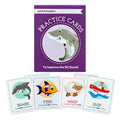
School or clinic? Send a purchase order or order through BuyBoard.
Details
When SH sounds slushy, make the tongue target clear.
The SH Speech Buddy is a tactile tongue placement tool for therapist-guided SH sound practice, in therapy and at home. Your speech therapist shows the placement; the Shark Buddy lets your child feel it between visits.
How it works
A target for the tongue plus rounded lips, so the SH placement is something your child can feel.
Each Buddy has its own color and animal so kids know which sound they are working on: SH is purple, and Shaw the Shark is the SH Buddy.
Build the sound, then fade the cue
- Learn it. Your speech therapist shows where the tongue goes for SH.
- Find the target. With the Buddy in place, your child feels the target.
- Practice. Say the sound with the tool while an adult holds the handle.
- Fade the cue. Alternate practice with and without the tool.
- Use it in words. Move into syllables, words and phrases, like show, sunshine, wash.
What's in the box
- 1 SH Speech Buddy (Shark)
- Protective metal case
- Instruction and lesson guide
Who it's for
One user, ages 3 and up, always with direct adult supervision. Do not use if the user is missing upper front teeth. Made for articulation practice when a child struggles to find the tongue position for SH. It isn't designed for language delays, stuttering or voice concerns.
Questions parents ask
Do we need a speech therapist to use it?
Speech Buddies are made for therapist-guided practice. Your speech therapist picks the target sound and shows the placement; you repeat that same cue at home between visits. It doesn't replace evaluation or treatment by a qualified speech therapist.
Is it right for my child?
It's for articulation practice when a child struggles to find the tongue position for a sound. Some children dislike objects in the mouth, so ask your speech therapist whether a tactile cue suits yours.
Can siblings share one?
No. Each Buddy is for one user, so two children practicing need one each.
How do I clean it?
Wash with mild soap and water and rinse well, or use the alcohol method in the instructions. Store it in its metal case.

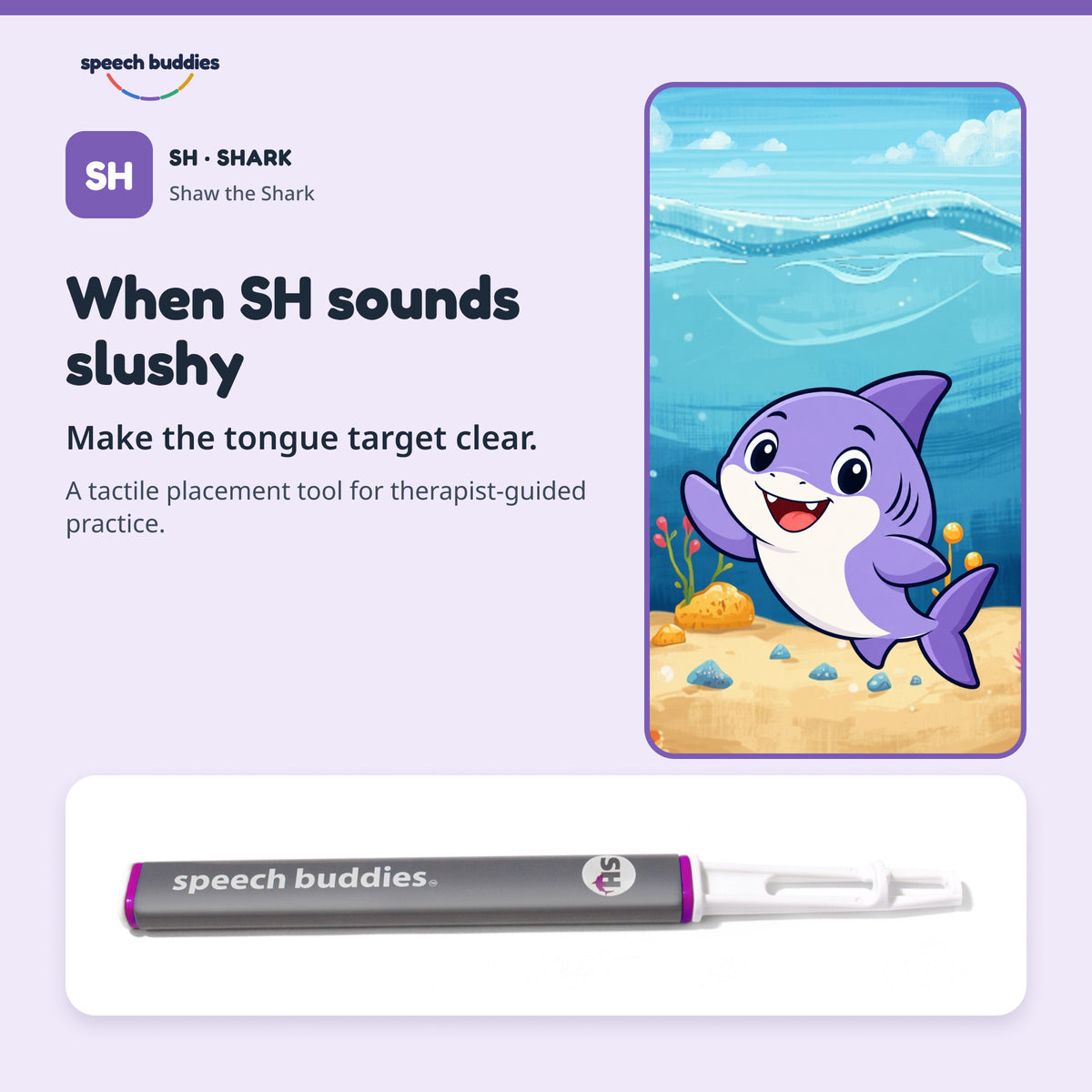





The stuck moment
When SH sounds slushy.
SH needs the tongue and the lips at the same time, and the tongue part is hard to explain.
The tactile answer
Give the tongue a target it can feel.


For SLPs: the clinical detail
From therapy to home.
-
Your speech therapist establishes the placement.
-
Your child practices with the tool.
-
Your family repeats the same target at home.
-
Practice with and without the tool.
-
Fade the tool and move into words.
Follow the included guide and your speech therapist’s plan.
In the box.
- SH Sound Tool
- Protective metal case
- Instruction and lesson guide
Care and use.
- One user.
- Direct adult supervision.
- Ages 3 and up.
- Do not share, allow chewing, or place the handle in the mouth.
- Follow the included cleaning and storage instructions.
Patented. BPA-free biocompatible plastic.
Learn about the SH sound
Helping a child with the SH sound.
Questions about this tool.
More answers on the FAQ page.
Which tool do I need?
Start with the sound your speech therapist is working on. Each tool gives the tongue a target for one sound. If you are working on more than one, the 5-Tool Set covers all five.
Do I need a speech therapist to use it?
Speech Buddies are for practice guided by a speech therapist. The therapist establishes the placement; the tool helps your child find it again at home.
How does home practice fit with therapy?
Use the tool the way your therapist showed you. Short practice between visits. Your therapist decides when to fade the tool and move into words.
Can siblings share one?
No. One tool is for one user.
How long does it take?
There is no timeline to promise. Your speech therapist sets the pace and decides when to fade the tool.
What does “round the lips” mean?
The lips push forward a little, in a soft circle, while the tongue touches the target. Your speech therapist will show your child the shape.
Working on more than one sound?
The 5-Tool Set covers R, S, SH, CH, and L in one protective case. One set for one user.
