
Is My Child Tongue-Tied?

Speech Disorders
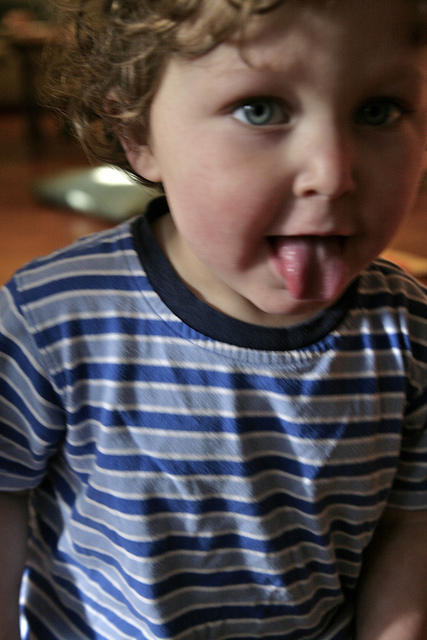
Child Sticking Out His Tongue

Image source: inderlovesfolkart.blogspot.com

Communicating with your child can be difficult sometimes even without a speech disorder to get in the way. But what if your child has a physical problem that interferes with his speech? We’ve all heard the expression “tongue-tied” to describe someone at a loss for words. However, ankyloglossia, or tongue tie, is a real physical condition.

Continue reading

Using Augmentative and Alternative Communication (AAC) Devices

Speech Therapy Techniques
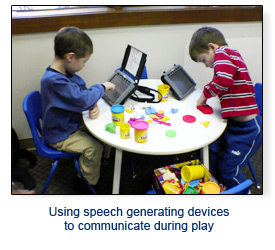
Children Using AAC Devices

Image source: CLASS, Inc.

Speech disorders can range from problems with articulation to problems speaking any words at all, such as selective mutism. Children who cannot speak at all or those who speak very little have difficulty expressing their basic needs and wants. This can become frustrating for them, which may sometimes result in behavioral issues. One solution is providing your child with an alternative means of communication.

Continue reading

Encouraging Communication in the Home

Speech Therapy Techniques
Mother Baking with Child

Image source: shop.kidscookingclass.com

While your child learns new communication skills with his speech-language pathologist (SLP), you can also work on your own communication skills. Learning more effective means of communicating with your speech disordered or delayed child can help him progress more quickly. Take advantage of everyday activities to encourage language. Create a communication-friendly environment for your child by using techniques that stimulate verbal and nonverbal communication. Always discuss home-based speech therapy with your child’s SLP. The SLP can offer advice and suggest educational activities that are tailored to your child’s needs.

Continue reading

Vocal Cord Paralysis

Speech Disorders
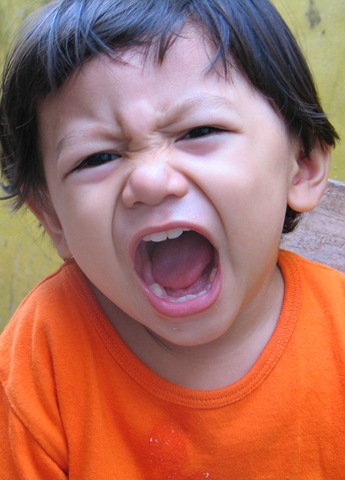
Child Yelling

Image source: shepherdsnotes.com

What Is It?

Vocal cord paralysis is a condition in which a person has difficulty speaking because one or both of his vocal cords cannot move. The vocal cords normally vibrate in order to produce voice. This condition can occur in a child or an adult. The most common type is unilateral vocal cord paralysis, in which only one vocal cord has either limited movement or no movement at all. If both vocal cords are immobile, it is called bilateral vocal cord paralysis. This condition will likely require a tracheotomy.

Continue reading