Paying for Cochlear Implants

Financial Resources Hearing Loss
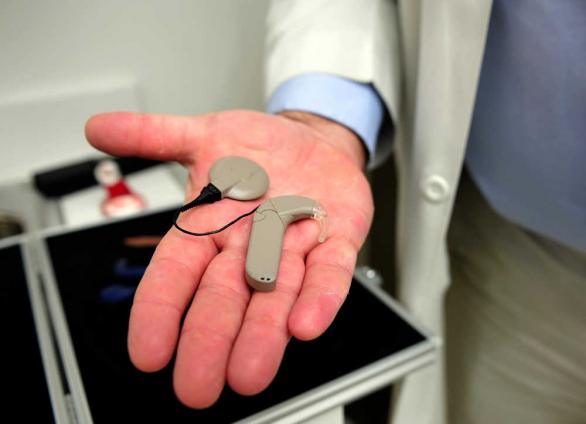
External Parts of Cochlear Implants

Image source: Chronicle.augusta.com

Children are absolutely priceless. But unfortunately, the cost of raising a child has risen nearly 40% from a decade ago, according to CNN Money. Not including paying for college, the average two-parent, middle-income household spends $226,920 raising a child from birth until the age of 18. And that figure will only rise, especially in this turbulent economy with skyrocketing food prices.

Parents of children with special needs often struggle more than most to ensure that their children get the proper medical care and therapies that they need. When a child is born with severe hearing loss, his parents might consider cochlear implants (CI). But the cost of the surgery, the devices themselves, and the maintenance would leave your jaw dropping. Including the surgery and post-operative fees, the average cost of cochlear implants in the U.S. is $50,000 to $100,000, according to the Northern Virginia Resource Center for Deaf and Hard of Hearing Persons. And that doesn’t include purchasing a warranty to cover the cost of replacement parts later on. Fortunately, there is help for low-income families who wish their child to have cochlear implants.

Continue reading

Language Development Affected by Anesthesia?

News
Child on Swingset

Image source: Directoutdoorliving.com

Parents like to imagine what their child might grow up to be like, even while they’re still filling out their wedding invitations or decorating the nursery. With a little bit of luck, your child will grow into a healthy, happy adult without ever needing heavy-duty medical treatment for a serious issue. But life doesn’t always work out that way, and sometimes young kids have to undergo surgery. Surgery often requires anesthesia so that the child sleeps during the procedure without feeling any pain. There have always been risks and complications associated with anesthesia, such as stroke, lung infections, mental confusion, and heart attack. Fortunately, those complications are quite rare. And when compared to the potential consequences of not having the surgery, the choice is often a no-brainer. But recent evidence raises a new question: could anesthesia affect speech and language development?

Continue reading

Teaching Children Sight Words

Speech Therapy Techniques
Children Learning to Read

Image source: Learn-spanish-online.maxupdates.tv

Reading is crucial for speech and language development. You might notice that your child “picks up” some words easily, while he struggles with others. There is a good chance that the words your child struggles with the most are sight words. Sight words are words that comprise roughly 50% to 70% of most text. Many of them cannot be “sounded out.” Your child will have to learn to recognize them on sight, hence the term “sight words.” You might sometimes hear “sight words” being referred to as “Dolch words.” They are the same thing. In 1948, Edward William Dolch, Ph.D., compiled The Dolch Word List, which lists 220 sight words.

Teachers often focus on sight words in kindergarten through third grade. Work with your child at home to develop his sight words skills to further his academic success. Collaborate with your child’s teacher and his speech-language pathologist (SLP) to determine the most effective learning methods for your child. For example, if he’s a visual learner, he might do best when presented with an image of the sight word.

Continue reading

Back to School: Preparing for Another Year

Individualized Education Program (IEP)
Back to School

Image source: Zatchels.com

Whether you are eagerly anticipating the sounds of the school bus or are already experiencing premature empty nest syndrome, there’s no denying that the start of another school year signals a transition for your child. Preparing your child to go back to school requires so much more than just buying him school supplies and the latest fashions in celebrity-inspired clothes. If your child has a speech disorder, you’ve probably already spent the summer doing language enrichment activities. Now it’s time to review his Individualized Education Program (IEP) and talk to the school district about changing it, if necessary. It’s also a good idea to get in touch with your child’s new teacher and/or new special education teacher.

Continue reading

Cochlear Implants: After the Surgery

Hearing Loss
Boy with Cochlear Implant

Image source: Letthemhear.org

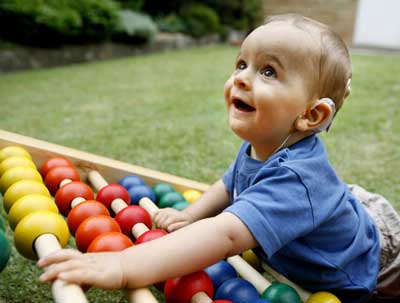
A child who receives cochlear implants has the opportunity to learn to perceive sound and develop speech and language skills. However, he will not be able to use the cochlear implant immediately after surgery. It typically takes three to six weeks for the ear to heal. The ear must heal before the surgeon attaches the external transmitter. Furthermore, it is important to remember that cochlear implants are not a cure for hearing loss. Speech therapy is critical for the best possible outcome. Your child must learn how to use his cochlear implant.

Continue reading